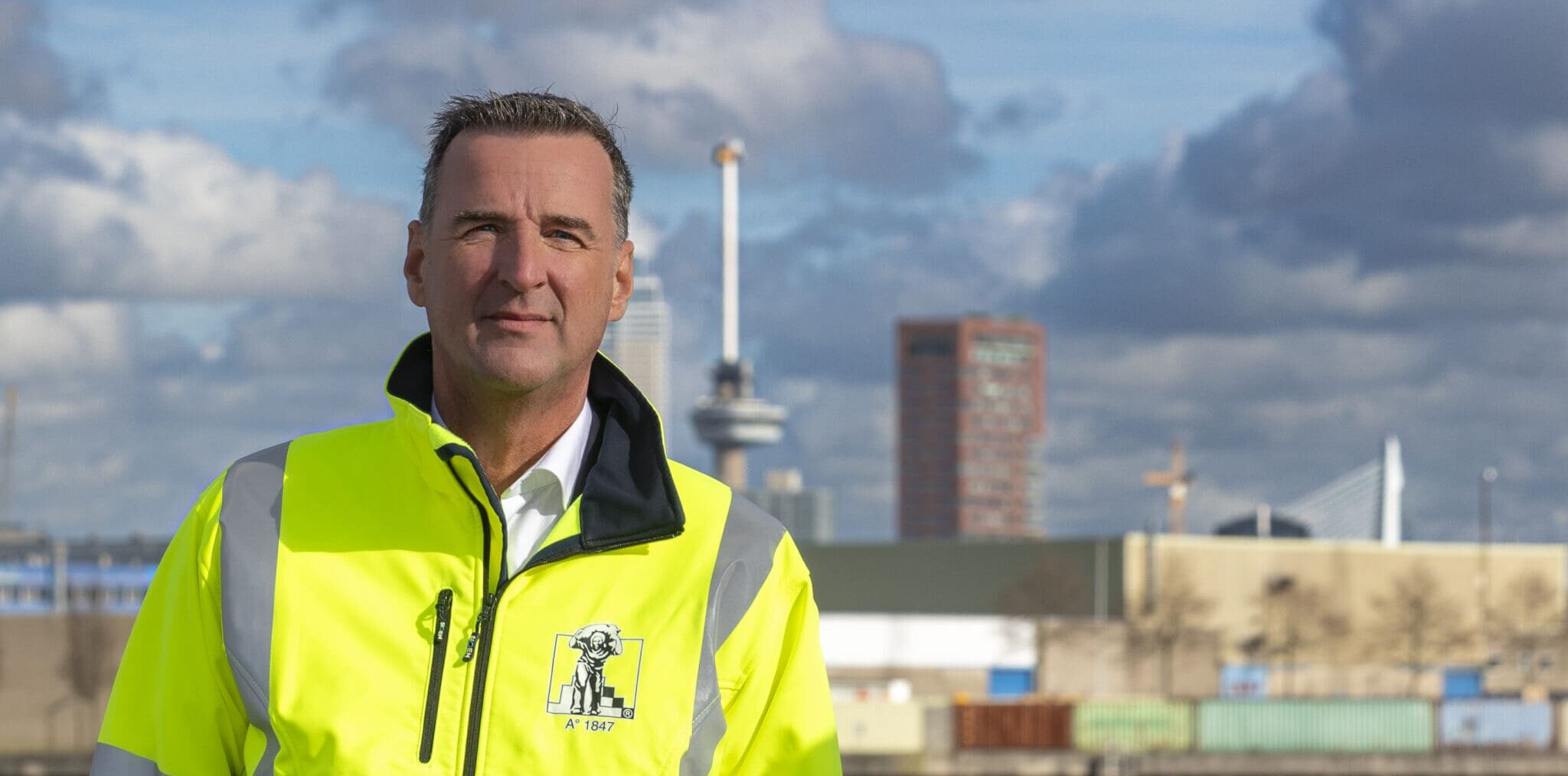
Looking back on 2025 and ahead to 2026, Ulf Boll, CEO of C. Steinweg Group, sees a world in constant motion. Trade flows are shifting, markets are developing at different speeds, and geopolitical and social changes continue to demand adaptability. For an international organisation like Steinweg, this calls for direction, clear choices, and sharp focus. At the same time, there is one principle that is never up for debate for Ulf. Safety is the foundation of everything Steinweg does worldwide. Not a temporary priority, but an absolute prerequisite in order to operate, for today and in the future.
“Safety is a global theme for the entire Group”, Ulf says. “It is our license to operate. We want to learn from each other internationally and apply improvements across the organisation. And a the same time, we have to take local laws and regulations into account.”
Safety: from obligation to reflexive habit
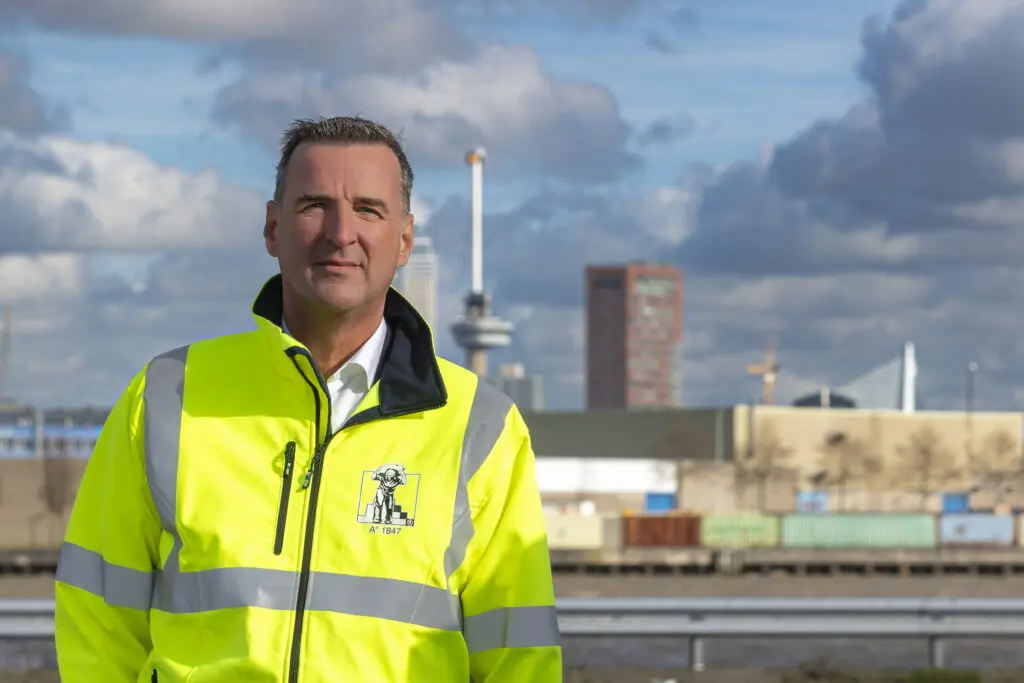
Ulf is keen to address a common misconception: improving safety is not about ticking boxes. “Yes, PPE is a component: vests, helmets, shoes, gloves, safety glasses, protective masks. Those are the technical aspects, but it’s also about processes and procedure. And above all: it is about culture.”
Balance is essential, he stresses. “Wearing a helmet just for the sake of wearing a helmet is not the point. People need to understand why they are wearing it. It’s not just an obligation. It has to be lived.”
Ulf sees cultural differences, but avoids pointing to specific countries. “Sometimes the challenge is cultural. In some places such awareness is less ingrained.” Change takes time, he notes. “When I was a child, wearing a seatbelt was uncommon. Now it’s second nature for almost everyone. But that took time.”
That is his core message: safety is built like habits. “It must not be a choice. It has to become a reflex”, he says, just like automatically fastening your seatbelt. That kind of change requires leadership, consistency and leading by example. “It starts with tone at the top. I am very aware of that.”
Global trade moves, goods keep flowing
Looking back on 2025, Ulf sees a market in motion. Driven not only by geopolitics, but also by new players and new trade flows. “What we see in broad terms is that companies that were not traditionally active in our markets, large traders from the energy sector, have decided to move into metals as well.” That metals market continues to grow, driven in part by the energy transition. “Metals are growing. Aluminium is growing, copper is growing, cobalt is growing, lithium is growing. All those energy transition materials are showing increasing volumes.”
Steinweg, as a logistics partner, plays a different role from that of traders. “Trade wars affect us less. We handle the logistics. Those goods will still move from A to B, perhaps in a different way.” That said, pressure on flexibility is increasing, for example due to potential tariffs or sudden peaks in demand. “That’s when our flexibility is tested. And having our own infrastructure helps. So far, we’ve been able to accommodate these kinds of movements.”
Europe under pressure, other regions accelerate
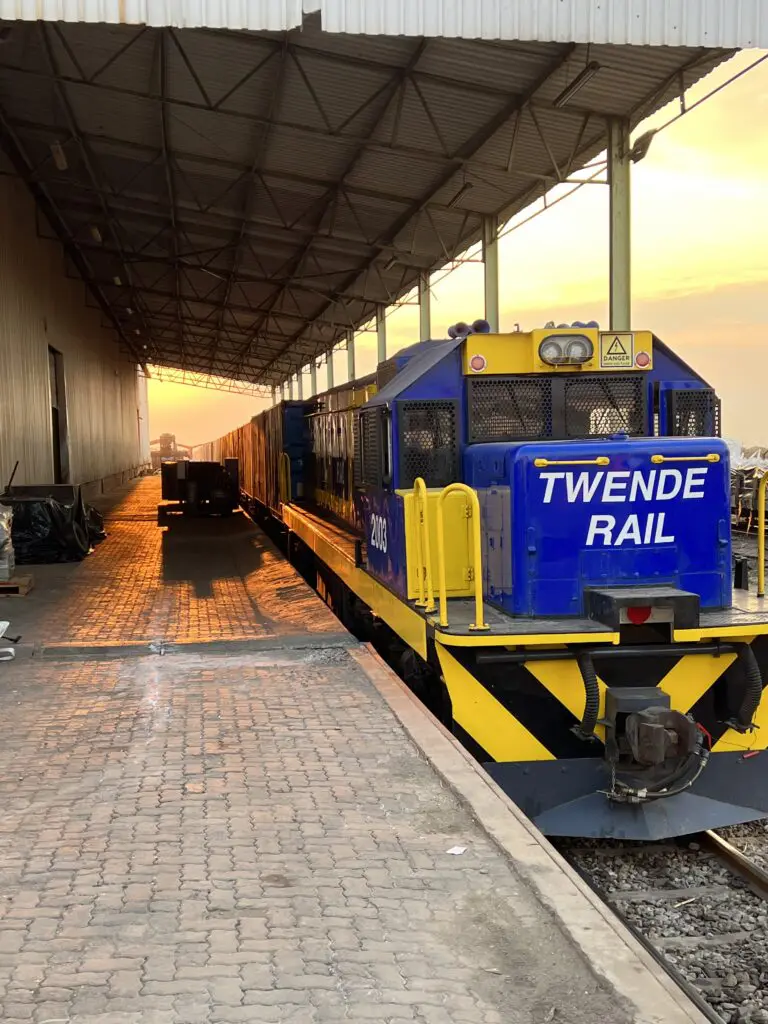
Ulf is realistic about Europe’s position. “Northern Europe and Europe face challenges. The automotive industry is under pressure, as is the chemical industry. That has an impact on our business in Northern Europe.” At the same time, Steinweg sees growth elsewhere. Africa, he says, remains an exception, with some caveats. “Africa is still a bright spot. But we were, for example, heavily affected by the DRC cobalt export ban from around February to November 2025, with no cobalt moving along the logistics routes.” Even so, the network held up. “It was a series of challenges, but we came through it well.”
India remains a strategic growth market. “India is the largest country in the world by population. It’s growing fast, with major investments in infrastructure and ports.” One observation stuck with him: “India’s largest port ranks only 17th globally. That’s remarkable. It shows there is huge potential and that a lot still needs to be built.”
Asia also remains crucial, with China as a key export engine. “China has its challenges, but it is still a major exporter and for that, it needs raw materials, which generates a lot of work for us.” Steinweg sees activity across the region. “South Korea, Taiwan, Hong Kong, Thailand, Malaysia, and more recently Indonesia. We have started operations in Jakarta.”
In the Middle East, Steinweg continued to build on its existing footprint. “We started in Jeddah. That was a quiet start, partly due to the Houthi situation. That has eased now, and we expect Jeddah to become active in 2026.” Capacity is also being added in the Emirates. “In Ras Al Khaimah, we plan to build our own warehouse complex. Hopefully that will happen in 2026.”
New flows: from cocoa to trade finance
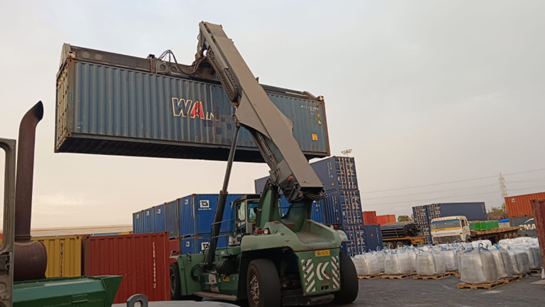
Alongside metals, Ulf sees notable shifts in soft commodities. “We see a major shift in global cocoa production. Traditional West African producers are declining in volumes, for various reasons including climate change.” At the same time, new producers are emerging. “Ecuador and Brazil are moving strongly into cocoa. We also see developments in Guinea.” For Steinweg, this is highly relevant. “We are already present in Brazil, in Ecuador, even in Congo. That means we can serve soft commodities as well as metals using pretty much the same infrastructure.”
Another theme that gained momentum in 2025 is trade finance. “We opened a new office in Switzerland. That value proposition is important for clients that large banks find too complex or too small to serve.” The difference lies in control and certainty. “Beyond knowing your customer, the key question is: where are the goods and do I have control over them? That’s something we can answer.”
Energy transition: new cargoes and new requirements
The energy transition affects Steinweg in two ways: through cargo flows and through its own operations. “Raw materials from Latin America and Africa mostly go to China and Korea, where major manufacturers are based, including battery producers.” It’s no longer just about car batteries. “It also includes grid storage batteries, the large batteries used in solar and wind parks.” These new cargoes come with new safety requirements. “These are so-called IMDG Class 9 cargoes: goods classified as dangerous and requiring additional safety measures”, Ulf explains. “They demand different procedures and specific infrastructure.” This is exactly where growth and safety intersect: scaling up is only possible if your foundations are strong.
Internally, Steinweg is working on electrifying its equipment. “The biggest source of emissions in our operations today is our rolling stock.” He gives a concrete example:
“I believe we were the first company in Europe to purchase a fully electric reach stacker.”
But this journey must be part of a broader transition. “It needs to be embedded in a transition program: reducing fossil fuels, phasing out machines and replacing them with electric ones.”
At the same time, Ulf is pragmatic. “It has to work in practice. You can install an electric reach stacker in Africa, but where will it charge? It has to be feasible.” That’s why Steinweg assesses each location individually. “The direction is clear: we want to decarbonize, among other measures through electrification, and we assess what truly works at each site.”
Looking ahead to 2026
For 2026, Ulf expects global trade and the economy to continue to surprise. One uncertainty he is watching closely is AI. “Everyone is talking about an AI bubble. Are we investing tens or hundreds of billions? Is it actually a bubble? I don’t know.” If it is a bubble and it bursts, it could lead to economic caution. “In previous cycles, we’ve seen that this tends to slow down the consumption of raw materials, with demand for storage actually increasing.”
What does he personally look forward to most? Once a year, Steinweg’s senior leadership comes together to set the course. “In 2026, we will do that in South Korea. For me, that is always a highlight: sitting together with colleagues, discussing the business, tackling the key themes, making decisions and moving forward.”
Published on: January 14th